 Reviews

 Proudly American

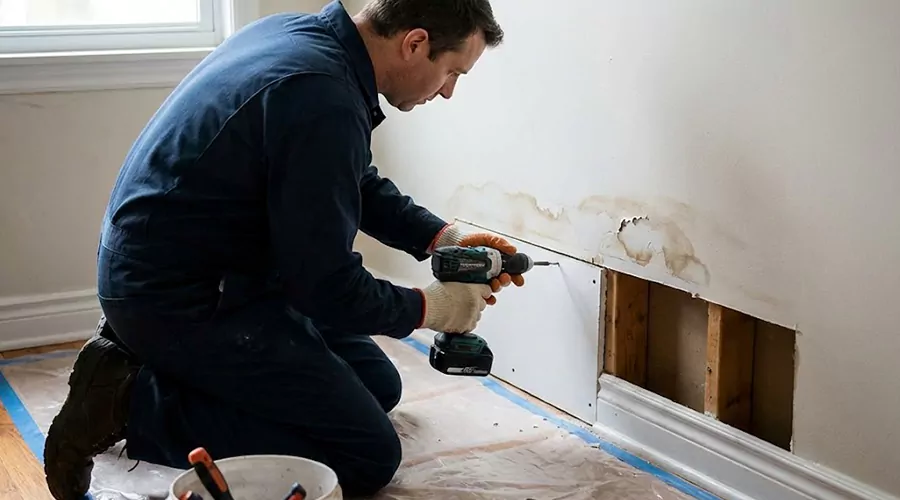
In 2026, water damage repair averages about $3,868 nationally and can range from $450 to $16,000. The first step is always to stop the source before removing water or replacing damaged materials. Wet areas should then be dried as quickly as possible.
Repairing the visible stain isn't enough if moisture remains below flooring or inside a wall. Water can spread into insulation or subfloors before obvious damage appears. A successful repair fixes the source first and confirms that affected materials are dry before rebuilding begins.
What Should You Do Before Repairing Water Damage?
Before repairing anything, stop the water source and determine whether the area is safe to enter. Standing water near electrical equipment creates a serious hazard. Floodwater can also contain sewage or other contaminants. Repair work should begin only after these immediate risks have been addressed.
Start with these checks:
- Identify where the water is coming from.
- Stop the leak when you can do so safely.
- Keep away from standing water near electrical equipment.
- Determine whether the water came from a clean or contaminated source.
- Move dry belongings away from the affected area.
- Photograph visible damage before removing materials.
- Check nearby rooms for signs that water has traveled farther.
Never enter standing water to reach an electrical panel. Power should only be shut off from a dry location when it can be done safely.
Outside floodwater requires extra caution. It can contain sewage or other contaminants that change how materials should be handled.
How to Repair Water Damage Step by Step?
Home water damage repair follows a clear sequence. Stop the source first and remove standing water next. Drying must happen before damaged finishes are replaced. Skipping the moisture check can trap water beneath new materials and create another problem after the room appears finished.
Step 1: Stop the Water Source
Find the cause before working on damaged surfaces. A leaking pipe or failed appliance connection will continue adding moisture until the source is corrected.
Common sources include:
- Broken plumbing supply lines
- Leaking toilets
- Washing machine hoses
- Water heater leaks
- Roof openings
- Dishwasher leaks
- Foundation water intrusion
A ceiling stain can come from plumbing above the room or from a roof leak. Finding the source before opening the ceiling prevents unnecessary repairs.
Step 2: Remove Standing Water
Water damage removal should begin as soon as the area is safe. Removing bulk water reduces the amount that floors or walls can absorb.
For a very small clean-water spill, towels or a wet vacuum may be enough. Larger amounts require more extraction capacity.
Water damage extraction is especially useful when carpet or other absorbent materials are saturated. Removing surface water alone will not dry the material below it.
Step 3: Remove Items That Hold Moisture
Move wet rugs and other movable items away from the affected area. This exposes more floor surface to airflow and prevents moisture from remaining trapped underneath.
Check furniture before placing it elsewhere. Furniture water damage can transfer moisture to an otherwise dry floor if the legs or base remain wet.
Items that cannot be cleaned or dried may need to be discarded. The decision depends on the material and the source of the water.
Step 4: Dry the Area Thoroughly
Drying should start immediately after standing water has been removed. Fans increase air movement while dehumidifiers lower the amount of moisture in the surrounding air.
The EPA recommends drying wet materials within 24 to 48 hours when possible. Indoor relative humidity should generally stay below 60 percent and preferably between 30 and 50 percent.
Wet carpet drying requires attention below the surface. Carpet fibers may feel dry while the padding remains damp.
Step 5: Check for Hidden Moisture
A surface that looks dry isn't always ready for repair. Moisture can remain behind baseboards or inside drywall after visible water disappears.
Check for:
- Swollen baseboards
- Soft drywall
- Loose flooring
- Warped wood
- Damp carpet padding
- Musty odors
- New paint bubbles
- Returning ceiling stains
A moisture meter can provide more useful information than touching the surface with your hand. Compare readings with similar materials in an unaffected part of the home when possible.
Step 6: Remove Materials That Cannot Be Saved
Some materials recover after controlled drying while others lose their shape or strength. The condition of the material should guide removal rather than the appearance of the stain alone.
Water damage mitigation may include removing unsalvageable material before further drying continues. Opening damaged areas can also expose moisture that was trapped inside the building assembly.
Step 7: Repair Only After the Area Is Dry
Repair work can begin after the moisture source has been corrected and affected materials have dried. Installing new flooring or drywall too early can trap moisture behind the finished surface.
Restoration after water damage may include replacing drywall or installing new insulation. Painting comes after the repaired surface has been prepared.
The order matters. Dry first and rebuild second.
What Materials Can Be Dried and What Must Be Replaced?
The decision to repair or replace depends on contamination and how badly the material changed after getting wet. Hard surfaces are often easier to save. Porous materials require more caution because moisture can enter areas that are difficult to clean or dry completely.
Use this as a general guide:
| Material | Often Repairable When | Replacement Is More Likely When |
|---|---|---|
| Drywall | Firm with limited clean-water exposure | Soft, swollen or contaminated |
| Hardwood | Slightly damp with little movement | Severely cupped or structurally damaged |
| Laminate | Very limited surface exposure | Swollen edges or separated layers |
| Carpet | Clean-water exposure with rapid drying | Contaminated or badly saturated |
| Carpet padding | Minor clean-water exposure | Saturated or contaminated |
| Insulation | Limited moisture depending on type | Saturated or contaminated |
| Solid wood furniture | Structurally sound and properly dried | Warped or severely damaged |
| Particleboard | Very minor exposure | Swollen or crumbling |
Water remediation becomes more complicated when contaminated water reaches porous materials. A surface that appears physically intact may still be unsuitable for normal cleaning.
Ceiling tiles are another example. Once heavily saturated, they commonly lose their shape and strength.
How Do You Repair Water-Damaged Drywall?
Water-damaged drywall can sometimes remain when exposure was limited and the board dries without swelling or loss of strength. Drywall that becomes soft or visibly deformed usually needs replacement. The leak must be fixed first because patching a wall while moisture remains behind it only hides the problem.
For repairable drywall:
- Confirm that the leak has stopped.
- Dry the wall and surrounding area.
- Check whether the drywall remains firm.
- Remove loose paint or damaged surface material.
- Repair minor surface defects.
- Apply a suitable stain-blocking primer when needed.
- Repaint after the repair has dried.
If part of the drywall has lost strength, remove the damaged section. Check the wall cavity before installing the replacement piece.
Drywall repair costs in 2026 commonly fall around $300 to $850 as part of a water-damage project. Larger sections can cost more when framing or insulation is also affected.
How Do You Repair Water-Damaged Floors?
Floor repairs depend on both the flooring material and how far moisture traveled underneath it. Water often moves through seams before the top surface looks badly damaged. The subfloor should therefore be considered whenever flooring remains wet or begins changing shape after a leak.
Hardwood Flooring
Wood can absorb moisture and expand. Early signs include cupping or raised edges between boards.
When trying to restore water damaged wood floor materials, avoid rushing into sanding while the boards are still wet. Wood needs time to reach a stable moisture level before cosmetic repairs are considered.
Boards that remain structurally sound may flatten as they dry. Severe warping or decay can require replacement.
Carpet
Carpet water damage extends beyond the visible fibers when the pad becomes saturated. Lift an accessible edge when it is safe to check whether moisture remains underneath.
Water damage carpet drying should address both the carpet and the underlying material. Drying only the upper fibers can leave moisture trapped below.
Water damage carpet cleaning may be reasonable after a small clean-water loss. Carpet exposed to sewage or outside floodwater requires a different decision because contamination becomes the larger concern.
Laminate Flooring
Laminate is less forgiving after substantial water exposure. Its fiberboard core can swell once water enters through the seams.
Slight surface moisture can be dried quickly. Boards with swollen edges or separated layers normally don't return to their original shape.
Tile Flooring
Ceramic or porcelain tile itself handles water better than many flooring materials. Problems can still develop underneath when water reaches the adhesive or subfloor.
Loose tiles or persistent moisture around grout lines can signal a problem below the finished surface.
How Much Does Water Damage Repair Cost in 2026?
Water damage repair costs about $3,868 on average in 2026. Many projects fall between $450 and $16,000 based on national cost data. The final price depends on the affected material and how contaminated the water is. Hidden structural damage can push the total higher.
Typical repair costs include:
| Type of Damage | Typical 2026 Cost |
|---|---|
| Appliance-related damage | $175 to $500 |
| Drywall damage | $300 to $850 |
| Roof-related damage | $400 to $2,000 |
| Ceiling damage | $450 to $1,600 |
| Basement damage | $500 to $2,800 |
| Overall water damage project | $450 to $16,000 |
The type of water also affects the cost. Clean water is easier to handle than contaminated water.
| Water Category | Typical 2026 Cost Per Square Foot |
|---|---|
| Clean water | About $3.50 |
| Gray water | About $5.25 |
| Black water | About $7.50 |
Water damage restoration cost can rise when water reaches several rooms or remains hidden for an extended period. Mold treatment and structural reconstruction can add separate expenses.
Cost of water damage repair also depends on how much finished material must be removed to reach wet areas. A small hidden plumbing leak can sometimes require more reconstruction than a larger spill contained on a hard floor.
When Should You Call a Professional?
Professional help is appropriate when the loss involves contamination or hidden structural moisture that can't be evaluated safely. Large areas also require more drying capacity than normal household equipment can provide. Electrical exposure or unstable building materials are clear reasons to stop DIY work and seek qualified help.
Consider professional assessment when:
- Several rooms are affected.
- Water has entered wall cavities.
- A ceiling is sagging.
- Hardwood flooring is severely buckled.
- Water reached electrical outlets.
- Sewage entered the property.
- Outside floodwater entered the home.
- Insulation is saturated.
- Moisture remains after active drying.
- Mold becomes visible.
- The source cannot be identified.
- Structural materials feel soft or unstable.
Emergency water damage repair is appropriate when delay is likely to let water continue spreading. Rapid assessment can identify areas that aren't visible from the finished room.
A trained inspection can use moisture readings to map the wet area. This helps determine whether materials should be dried in place or removed.
How Can You Prevent Water Damage After Repairs?
Preventing another loss starts with correcting the original cause rather than treating only the damaged finish. Plumbing connections and drainage systems should be checked on a routine schedule. Areas that have leaked before deserve extra attention because small changes can reveal that the original problem has returned.
A practical prevention routine includes:
- Check exposed plumbing every month for drips or corrosion. Look closely beneath sinks and around toilets.
- Inspect appliance supply hoses several times each year. Replace hoses that show cracks or swelling.
- Check around the water heater for moisture or corrosion.
- Clean gutters when debris begins limiting drainage.
- Make sure downspouts discharge away from the foundation.
- Test a sump pump before periods of heavy rain.
- Inspect ceilings after major storms for new discoloration.
- Watch previously repaired walls for returning stains.
- Keep indoor humidity below 60 percent when possible.
- Investigate musty odors rather than masking them.
Water damage clean up is much easier when a leak is discovered before it reaches several building materials. A small plumbing connection can cause a large repair if moisture remains hidden for days.
The best habit is regular inspection. Look beneath appliances and around plumbing fixtures before visible damage gives you a reason to check.
Conclusion
Water damage repair works best when the source is stopped before drying and rebuilding begin. Remove standing water quickly and check for moisture below visible surfaces. Repair materials only after they are dry enough for reconstruction. Contaminated water or electrical hazards require greater caution. This week, inspect the plumbing connections and moisture-prone areas in your home for early signs of leakage.
Frequently Asked Questions
Can you paint over a water stain after it dries?
A dry stain can be primed and painted only after the moisture source has been corrected. Painting over an active leak will allow the discoloration to return.
Will a dehumidifier dry water inside walls?
A dehumidifier lowers moisture in the surrounding air and supports drying. It doesn't confirm that a closed wall cavity has completely dried.
Can a water-damaged ceiling collapse?
Severe saturation can weaken ceiling materials and increase the risk of sagging or failure. Avoid standing beneath a ceiling that is visibly bulging or unstable.
Does homeowners insurance cover water damage?
Many policies cover sudden accidental water losses such as a burst pipe. Coverage for flooding or long-term leaks can be different, so the individual policy controls the answer.
Can furniture be saved after getting wet?
Solid furniture can sometimes be dried and restored after clean-water exposure. Upholstered or contaminated items require closer evaluation because moisture can remain inside the material.
How do you know when a repaired area is fully dry?
Appearance alone isn't enough. Moisture readings can be compared with similar unaffected materials to determine whether drying has progressed to an acceptable level.